

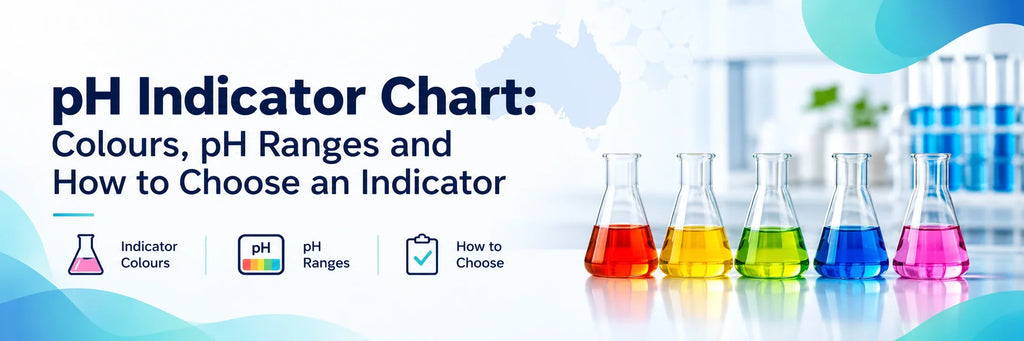
pH Indicator Chart: Colours, pH Ranges and How to Choose an Indicator
Quick answer: An acid–base indicator changes colour over a set pH range. Methyl orange changes from red to yellow at pH 3.1–4.4, bromophenol blue from yellow to blue at pH 3.0–4.6, bromocresol green from yellow to blue at pH 3.8–5.4, methyl red from red to yellow at pH 4.4–6.2, and phenolphthalein from colourless to pink at pH 8.2–10.0. For a titration, choose an indicator whose range falls on the steep part of your titration curve.
Indicators are one of the simplest tools in the laboratory, but choosing the wrong one can give you the wrong end point. This guide gives you a pH indicator chart for the most common acid–base indicators, explains how to choose the right one for a titration, and covers two indicators that work differently: starch and methylene blue.
What is a pH indicator?
A pH indicator is a weak acid or weak base that has a different colour in its acid and base forms. As the pH of a solution changes, the balance between the two forms shifts, and the colour changes over a narrow pH range called the transition range. Indicators are used to find the end point of titrations and to check whether a solution is acidic or alkaline.
pH indicator chart
| Indicator | pH range | Colour change (acid → base) | Typical use |
|---|---|---|---|
| Bromophenol blue | 3.0 – 4.6 | Yellow → blue | Titrations with an acidic end point; also used as a tracking dye |
| Methyl orange | 3.1 – 4.4 | Red → yellow | Strong acid with weak base titrations |
| Bromocresol green | 3.8 – 5.4 | Yellow → blue | Titrations with an end point around pH 4–5 |
| Methyl red | 4.4 – 6.2 | Red → yellow | Strong acid with weak base titrations |
| Phenolphthalein | 8.2 – 10.0 | Colourless → pink | Weak acid with strong base titrations |
| Universal indicator | Wide range (ANPROS: pH 4 – 11) | A series of colours across the range | Estimating the pH of a solution |
Transition ranges can vary slightly between references and with indicator concentration and temperature, so treat them as a guide.
How to choose an indicator for a titration
At the equivalence point of a titration, the pH changes very quickly. A good indicator changes colour within that steep jump. The type of acid and base decides where the jump happens.
| Titration | pH at equivalence | Suitable indicators |
|---|---|---|
| Strong acid + strong base (for example HCl with NaOH) | About 7 | Phenolphthalein or methyl orange both work, because the pH jump is large |
| Weak acid + strong base (for example acetic acid with NaOH) | Above 7 | Phenolphthalein |
| Strong acid + weak base (for example HCl with ammonia) | Below 7 | Methyl orange, methyl red or bromocresol green |
| Weak acid + weak base | No sharp jump | No indicator gives a clear end point; use a calibrated pH meter instead |
Methyl orange indicator
Methyl orange is red below about pH 3.1 and yellow above about pH 4.4, with orange in between. Because it changes colour in acidic conditions, it suits titrations of a strong acid with a weak base, such as hydrochloric acid with ammonia. ANPROS supplies methyl orange indicator 0.2% in 200 mL.
Bromophenol blue
Bromophenol blue is yellow below about pH 3.0 and blue above about pH 4.6. Like methyl orange, it changes colour in the acidic range. It is also widely used as a tracking dye in laboratory work. See bromophenol blue (free acid, lab grade).
Bromocresol green
Bromocresol green changes from yellow to blue between about pH 3.8 and 5.4. ANPROS stocks it as a 0.04% aqueous solution, a 1% ethanol solution and as a solid (AR grade).
Phenolphthalein
Phenolphthalein is colourless in acid and turns pink from about pH 8.2, so it is the usual choice for weak acid and strong base titrations. Read more in our phenolphthalein indicator guide, or buy phenolphthalein indicator 1% w/v.
Indicators that don't measure pH
Not every laboratory indicator is an acid–base indicator.
- Starch indicator forms a deep blue-black colour with iodine. It shows the end point in iodine titrations (iodometry) rather than a pH change.
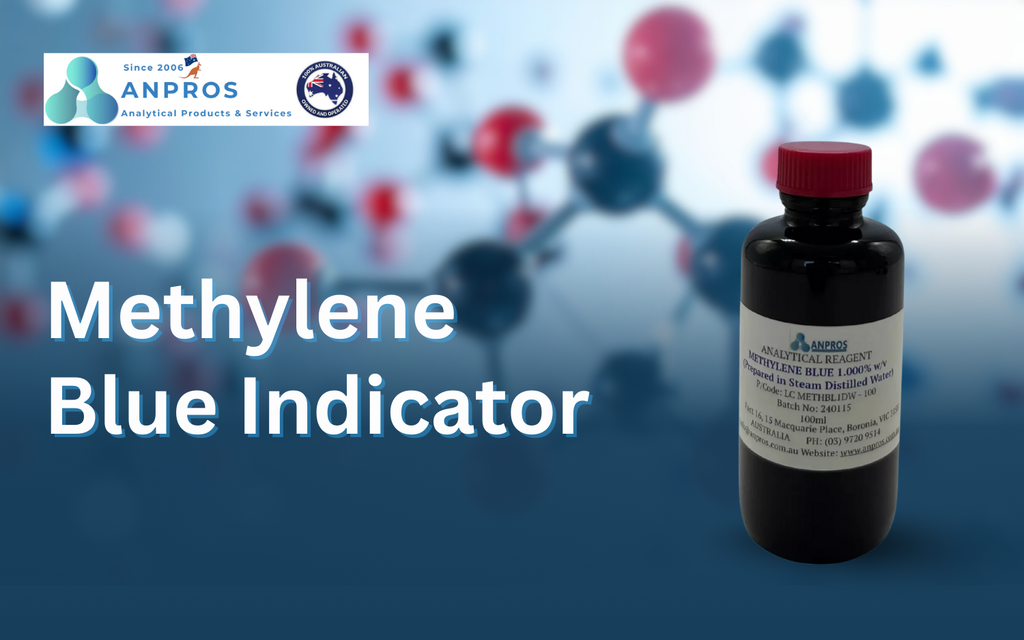
- Methylene blue is a redox indicator: it is blue when oxidised and colourless when reduced. See our methylene blue indicator guide.
Tips for using indicators
- Use only a few drops. Too much indicator can affect the result, because indicators are weak acids or bases themselves.
- Use the same indicator, and the same amount, for every titration in a series.
- Look at the colour against a white background.
- For coloured or cloudy samples such as red wine, a pH meter gives a more reliable end point than a colour change.
- Keep indicator bottles closed and store them as the label directs.
Frequently asked questions
What is the pH range of methyl orange?
About pH 3.1 to 4.4. It is red below this range, yellow above it and orange in between.
What is the pH range of bromophenol blue?
About pH 3.0 to 4.6, changing from yellow to blue.
Which indicator is used for a strong acid and weak base titration?
An indicator that changes colour in the acidic range, such as methyl orange, methyl red or bromocresol green.
Which indicator is used for a weak acid and strong base titration?
Phenolphthalein, which changes from colourless to pink at about pH 8.2 to 10.0.
Can I use any indicator for a strong acid and strong base titration?
Phenolphthalein and methyl orange both work well, because the pH changes sharply over a wide range at the equivalence point.
What is starch indicator used for?
Starch indicator shows the end point of iodine titrations by forming a blue-black colour with iodine. It is not a pH indicator.
Where can I buy laboratory indicators in Australia?
ANPROS in Boronia, Victoria supplies methyl orange, bromophenol blue, bromocresol green, methyl red, phenolphthalein, universal indicator, starch indicator and methylene blue. Browse our laboratory chemicals.
Buy laboratory indicators from ANPROS
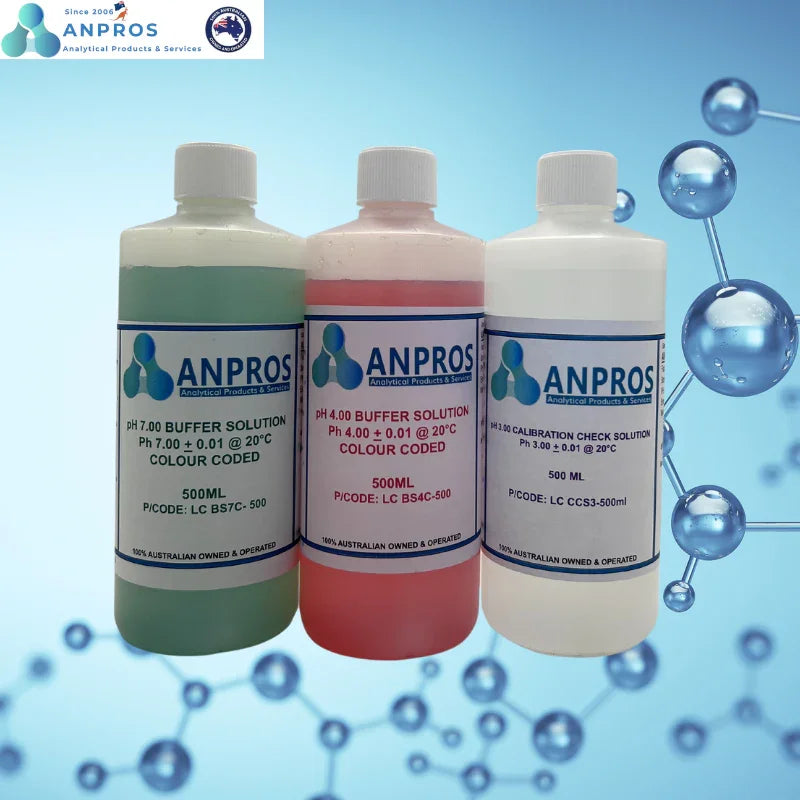
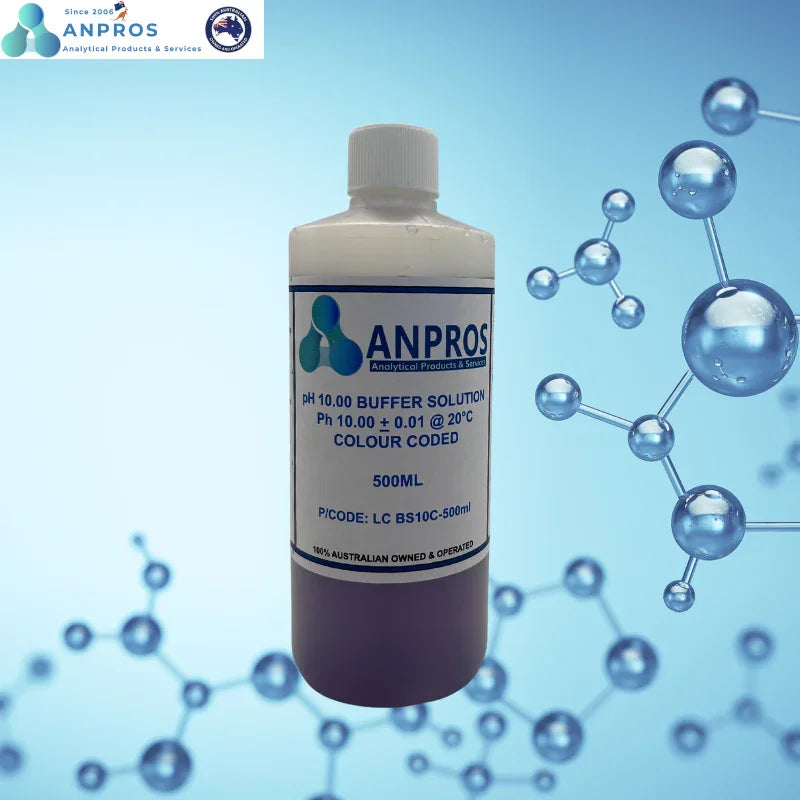
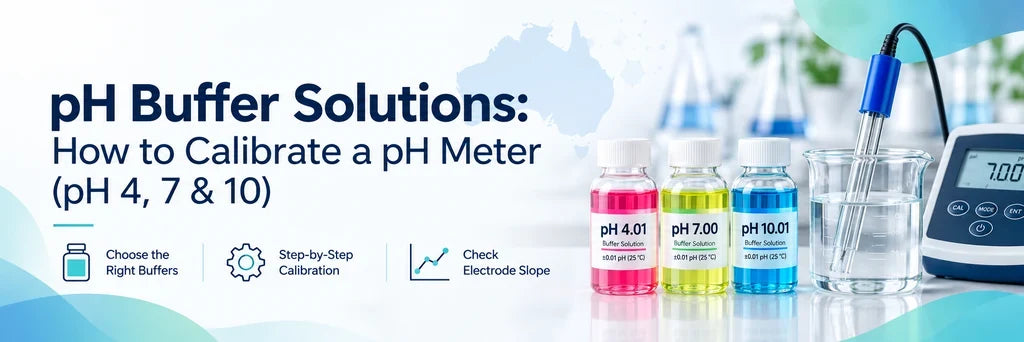
ANPROS supplies acid–base and specialty indicators for laboratories, schools, wineries and industry. Browse the full laboratory chemicals range, see our pH buffer and calibration solutions, or contact the ANPROS team.
Related post

04
Dec
28
Aug
RECENT POSTS
04.December.2025
The Foundation of Accuracy: Why Lab-Grade Glassware Detergent is Non-Negotiable – Supplied by Anpros
0 Comments